

MyHealth@Eu Electronic Prescription and Dispense
1.0.0-poc - qa-preview
150
MyHealth@Eu Electronic Prescription and Dispense
1.0.0-poc - qa-preview
150
This page is part of the MyHealth@Eu Electronic Prescription and Dispense (v1.0.0-poc: QA Preview) based on FHIR (HL7® FHIR® Standard) R4. This is the current published version. For a full list of available versions, see the Directory of published versions
This guide:
The following figure shows how the eHN guidelines, MyHealth@EU Functional Requirements, and HL7 FHIR specifications relate across the different IGs.
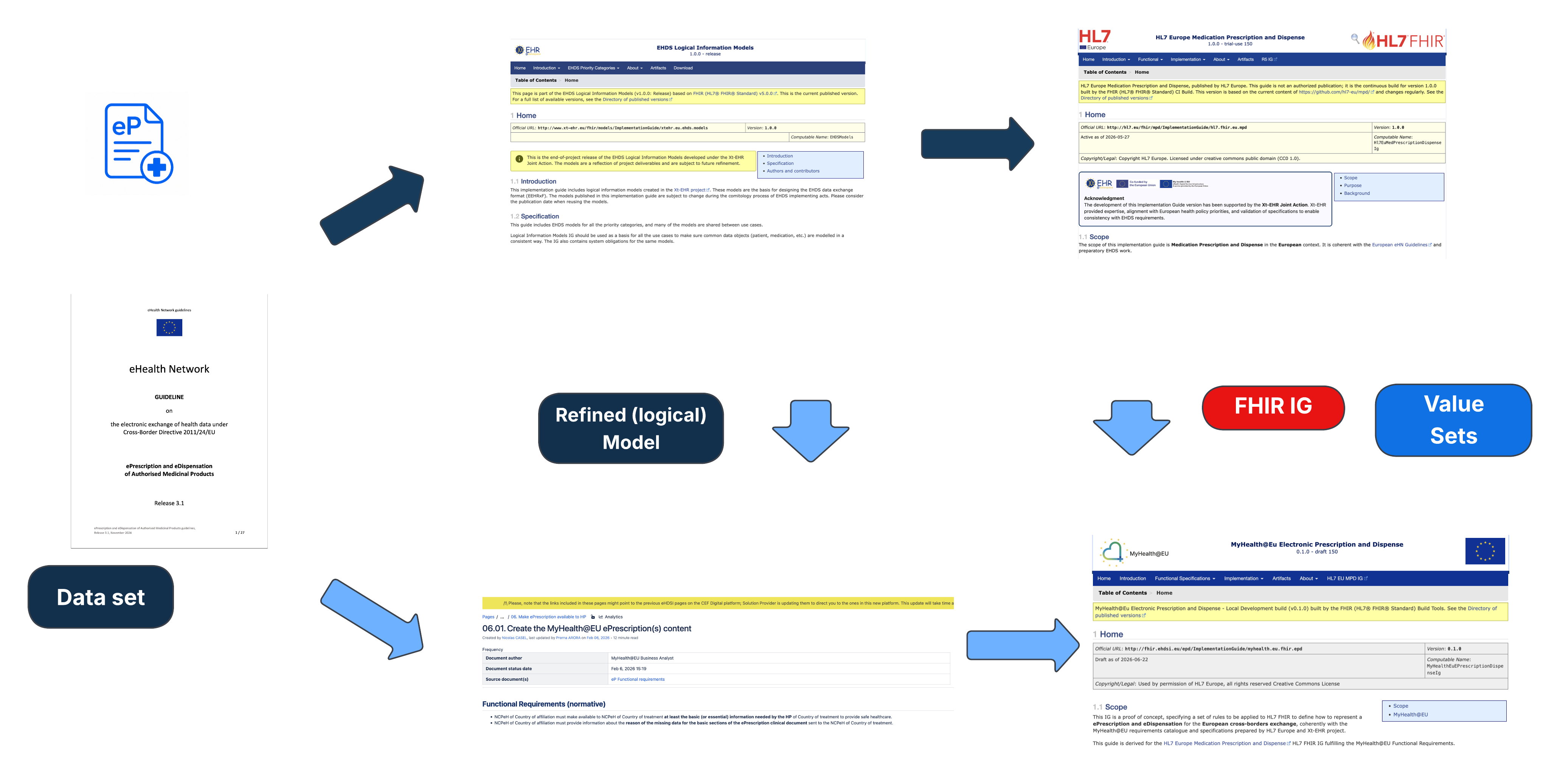
Figure 1 - From the eHN guidelines to the MyHealth@EU specifications
This guide includes two main kinds of content:
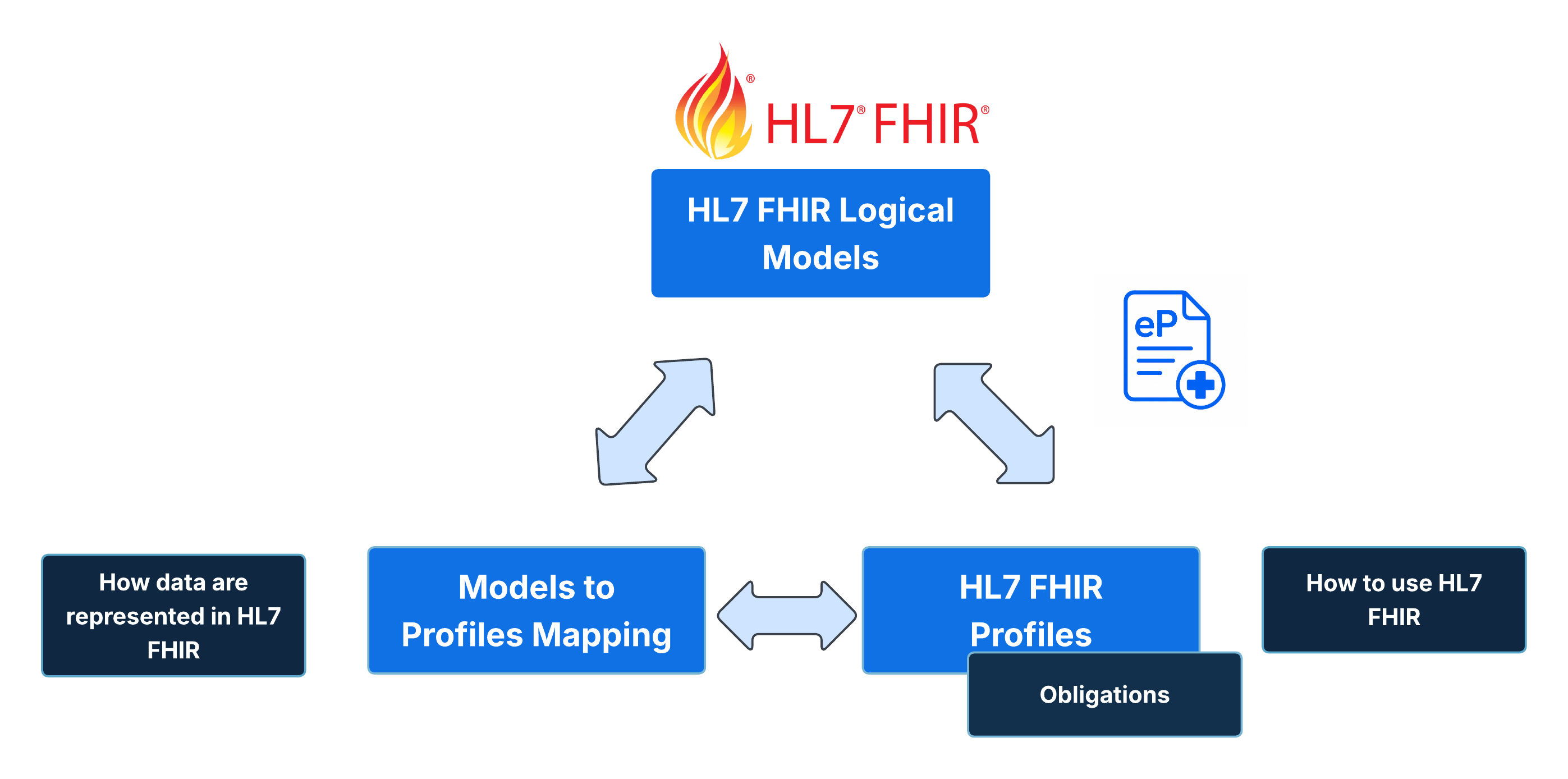
Figure 2 - Guide Content
A detailed description on how to read HL7 FHIR Implementation Guides is provided in the Reading Implementation Guides guide.
This guide uses obligations on the logical models to highlight the elements identified by the MyHealth@EU Functional Requirements. Three types of obligations are defined:
SHALL:handle) — the data element must be provided.SHOULD:handle) — the data element must be provided, although exceptional justifications may apply.MAY:able-to-populate) — the data element may be omitted.These obligations are implemented using the following rule sets:
ObligationMandatory — SHALL:handle for mandatory elementsObligationRequired — SHOULD:handle for required elementsObligationOptional — MAY:able-to-populate for optional elementsImportant: Regardless of whether data elements are mandatory, required, or optional, if they are present in the document, they cannot be omitted when displaying information to health professionals. All present data elements must be displayed by consuming systems.
Implementers should be aware of the differences between HL7 FHIR and HL7 CDA when interpreting obligation levels.
In HL7 CDA, elements can generally be nullFlavored unless explicitly flagged otherwise. In HL7 FHIR, 1.. cardinality implies a truly mandatory element. For this reason, required fields are not necessarily mapped to 1.. cardinality — the data-absent-reason extension is used where a value may be legitimately absent.
The Mapping to Profiles page documents how each MyHealth@EU logical model element maps to a specific FHIR R4 path in the corresponding profile. Mappings are expressed as tables with three columns:
More details about the ePrescription and eDispensation models are available on the ePrescription and eDispensation Models Overview page.
IG © 2023+ MyHealth@Eu. Package myhealth.eu.fhir.epd#1.0.0-poc based on FHIR 4.0.1. Generated 2026-07-16
